Why Does Everything Have to Be About Race? Because it is.
“Silence is the ocean of the unsaid, the unspeakable, the repressed, the erased.” — Rebecca Solnit

Someone is saying it right now. At a kitchen table in Ohio, on a cable news panel, in the congressional record itself. The tone is always the same — a kind of weaponized exhaustion, the verbal equivalent of a heavy sigh. Why does everything have to be about race? As if the problem is the conversation. As if naming a fire is the same as setting one.
So let’s answer the question. Directly. Carefully. Without apology.
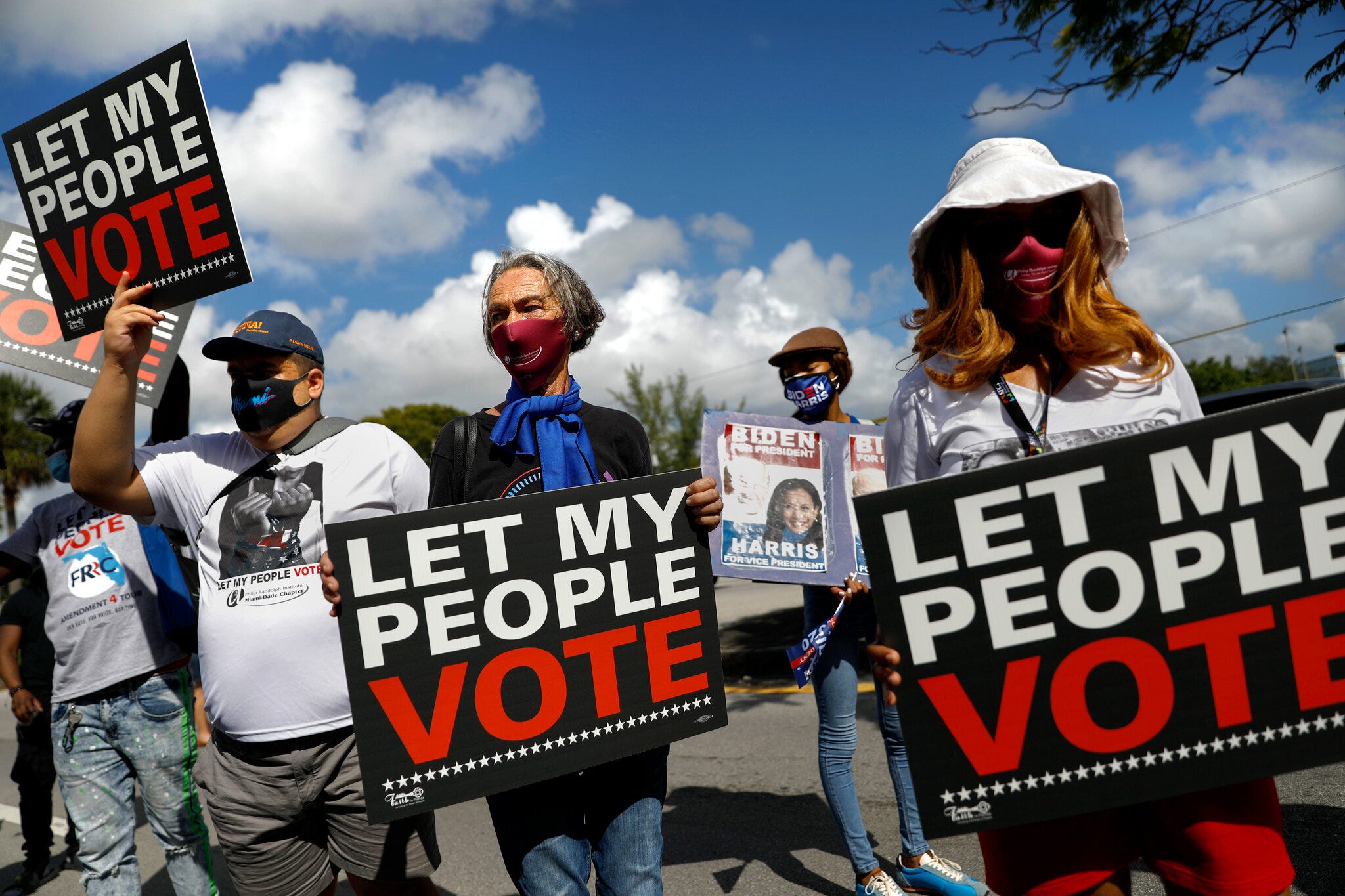
The Voting Rights Act repeal — or its gutting, depending on which legislative mechanism you’re watching this week — targets precincts, counties, and states where Black voter turnout has been rising. Not Democrat-leaning rural white counties. Not Indigenous territories, though they’re catching stray damage. The geography of disenfranchisement, if you lay it over a map of racial demographics, produces a correlation so clean it would embarrass a first-year statistics student into honesty. The architects of this policy know this. Their consultants know this. The people voting for it know this. What they’re banking on is that you either won’t say it out loud, or that when you do, the phrase “why does everything have to be about race” will be deployed like a fire suppression system — not to address the argument, but to flood it.
This is not new. It has never been new. Literacy tests were not about literacy. Poll taxes were not about fiscal responsibility. Grandfather clauses were not about protecting family legacy. They were about one thing, dressed in the administrative language of one thing else. The American tradition of racial control has always required a translation layer — something that sounds procedural, neutral, technical. “States’ rights.” “Law and order.” “Election integrity.” “Partisan redistricting.” Each phrase is a forwarding address. The mail is always the same.
What’s different now is the brazenness. The translation is getting sloppier because the translators have decided they no longer need to be convincing — they just need to be fast. Get the policy in place before the challenge reaches the court. Suppress enough votes in enough cycles that the demographic math stops mattering. This is not paranoia. This is the stated strategic logic of voter suppression, documented in consulting memos, leaked emails, and the occasional unguarded moment of candor from someone who forgot a microphone was on.
So when they say partisan, not racial — understand what that sentence is doing. It is asking you to evaluate a policy by its stated intention rather than its measurable effect. It is asking you to believe that a law which systematically reduces voting access in majority-Black districts is a coincidence. It is asking you to extend good faith to people who have spent decades demonstrating they have none to return. “Partisan” is not an explanation. It’s a translation. And a lazy one.
Then there’s the crime argument. It arrives reliably, like a second act. “What about Black on Black crime?” Deployed not as genuine concern for Black victims — if it were, these same voices would be demanding investment in the communities being destroyed by violence — but as a conversation-stopper. A way of saying: you forfeit the right to discuss your disenfranchisement until you answer for this first.
So let’s look at the data. FBI statistics show that 84% of white victims are killed by white offenders. That 88% of Black victims are killed by Black offenders. That between 2017 and 2021, Black offenders were involved in about 15% of violent victimizations of white people, while white offenders were involved in over half of all violence against other white people. Most violent crime, across every demographic, is intraracial. Proximity drives crime, not race. People commit crimes in their own neighborhoods because that’s where they live. This has been true in every community, in every era, in every country that has ever been studied.
So why don’t we talk about white on white crime? We do. We just call it crime.
Now the second charge: that Black Americans commit more crime proportionally. The raw arrest numbers do show a disparity. But here is what that argument deliberately leaves out. Black Americans are two and a half times more likely to live in poverty. Unemployment among young Black men runs roughly double the rate of their white counterparts. Research consistently shows that when socioeconomic factors are controlled for, racial disparities in crime rates diminish significantly. Poverty produces crime. Segregation produces poverty. Redlining, restrictive covenants, deliberate federal housing policy — these produced the segregation. The throughline is policy, not pathology. The disparity is a racial consequence. It is not a racial cause. These are not the same argument, and conflating them — deliberately or otherwise — is the same forwarding-address trick we saw earlier. Different envelope. Same mail.
Here is the thing about the “why does everything have to be about race” crowd that never gets said plainly enough: they experience race as a topic. Something that comes up. Something that gets raised, usually by someone unreasonable, usually at an inconvenient moment. They have the extraordinary luxury of not experiencing it as a condition — as the water they swim in, the variable that shapes everything from whether a cab stops to whether a doctor takes the pain seriously to whether their vote gets counted. When you experience race as a topic, being asked to talk about it feels like an imposition. When you experience it as a condition, being asked to stop talking about it feels like a demand that you stop describing reality.
These are not equivalent positions. One of them is comfortable. The other is true.
Which brings me to the question I anticipate. Why does an Armenian-Italian even care? Why is this your fight?
Let me tell you about Armenians
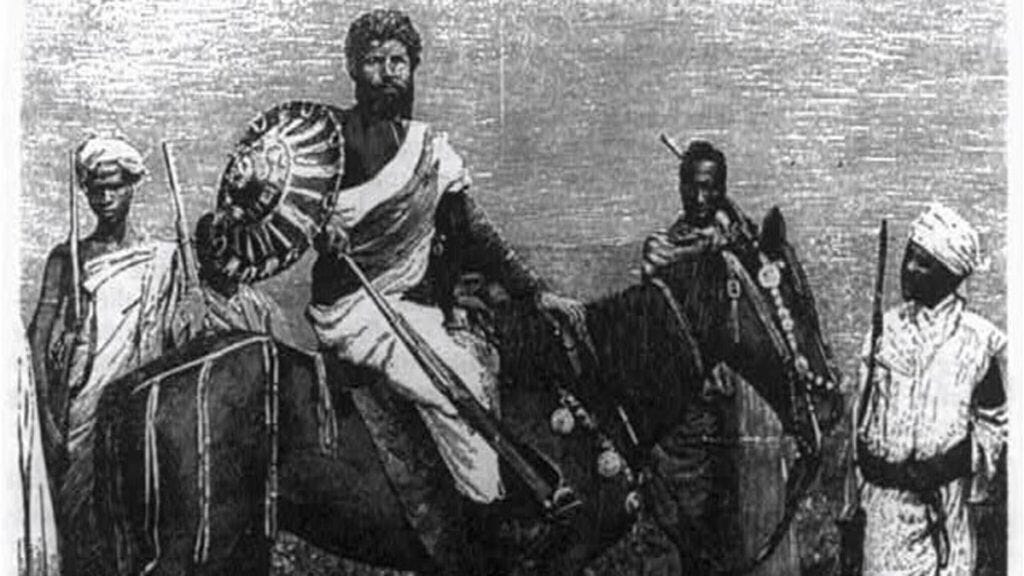
Armenia was the first nation to adopt Christianity as its state religion, in 301 AD. It is one of the oldest continuous Christian communities on earth, with ancient ties to Ethiopia — another early Christian nation, another civilization whose history and depth the Western world has systematically undervalued. My people have been on this earth, building culture, practicing faith, writing literature, for longer than most of the nations currently lecturing others about civilization.
In 1915, the Ottoman Empire began the systematic extermination of the Armenian people. What followed was the 20th century’s first genocide — a word that did not yet exist but was later coined, in part, because of what happened to us. Approximately 1.5 million Armenians were killed. Entire communities were erased. Villages that had existed for centuries were gone in months.
My grandfather escaped as a boy. A Turkish man — from the nation carrying out the slaughter — helped get the children out of his village. One person who refused to participate in the machinery of extermination. My grandfather made it out. First to Palestine then the USA. He never saw his family again. Every person left behind was killed.
I carry that story the way you carry something that lives in the bone. And what I know from it — what it has made impossible for me to un-know — is exactly what systematic erasure looks like. The administrative language that precedes it. The way a state decides a people don’t fully count. The translation layer that converts racial and ethnic hatred into procedural neutrality. “Inter-communal conflict.” “Wartime relocation.” The United States did not formally recognize the Armenian Genocide until 2021. One hundred and six years of the forwarding address.
So when I see voter suppression dressed as election integrity, I am not learning something new about how power works. I already know.
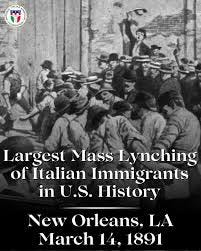
Now let me tell you about Italians in America. Specifically Southern Italians, who were not considered white upon arrival. “Negroes with straight hair” was not a metaphor — it was the actual classification deployed by American nativist science and popular culture. In 1891, eleven Italian immigrants were lynched in New Orleans after a jury acquitted them of murder charges. The mob decided the justice system had failed to do what it was supposed to do to people like them. It remains one of the largest mass lynchings in American history. Italians were segregated in parts of the South. Told they weren’t quite white enough for full membership in the American project.
Over generations, Southern Italians — my people on that side — were gradually folded into whiteness as a political category. That assimilation came at a cost James Baldwin understood better than most: the price of entry into whiteness is the adoption of its terms. You learn who counts and who doesn’t. You learn to cross the street, or look away, or stay quiet. My family paid that fare. Knowing what it cost, knowing what we went through to be here, and then watching another people face the same machinery of erasure — silence is not available to me. It wouldn’t be honest.
And then there’s the music.
I was a kid when I first heard it — the tradition that would define my entire life and give me my livelihood and, honestly, a large part of my soul. Miles Davis. John Coltrane. The blues that runs underneath everything like a root system. This is not music I appreciate from a distance. It is music that made me. It formed my ear, my sense of time, my understanding of what it means to say something true through an instrument. I have spent nearly fifty years inside this tradition as a working musician, and I am clear about where it comes from. It comes from the same people whose votes are now being called a partisan inconvenience. The same people whose history is being minimized. The same people being told to get over it.
The fruit of that tree fed me. It feeds me still. Speaking out is the absolute minimum the music and the people who created it deserves.
I know what I’m talking about not just as a matter of heritage and history, but as a witness. I toured with Queen Latifah. I was the only non-Black person in the band. I checked into the same category of hotels I’d stayed in with white bands — the same price point, the same brands, sometimes the same properties. The treatment was not the same. The speed of service at the front desk. The tone. The assumptions made before a word was exchanged. I’d seen the other version enough times to know the difference wasn’t random.
I’ve been pulled over by police with white friends in the car and with Black friends in the car. With white friends, the interaction was professional. Sometimes almost cordial. With Black friends, guns were drawn before a single question was asked. Before anyone knew why we’d been stopped, before any exchange had taken place, before any behavior had occurred that could conceivably justify it. Weapons out. On the street. Over a traffic stop.
I was the observer in those moments. I was getting the comparative data in real time, and I was furious. And I was the one with the luxury of being furious as a visitor to that reality, not a permanent resident of it. I cannot fully imagine what it costs — psychologically, physiologically, spiritually — to absorb that level of threat as a routine feature of an ordinary day. To have to prepare your children for it. To manage your own adrenaline response in the moment while also performing non-threatening so the interaction doesn’t escalate to something worse. My Black colleagues and friends have a phrase for when a white person finally clocks what’s been in front of them the whole time. They say: now you know what’s up. It lands somewhere between relief that you finally see it and exhaustion that it took this long.
But according to some, everything has changed. They should be over it by now. After all — and here comes the argument that deserves its own dismantling — they call themselves the N-word.
This is one of the laziest intellectual maneuvers in the American playbook, and it needs to be named for what it is. The reclamation of a slur by the community it was used to dehumanize is not an erasure of that history. It is a defiant act of recontextualization — taking a weapon and refusing to let it retain its original power over you. That is a psychologically sophisticated and historically documented response to trauma and oppression. It does not belong to anyone outside that community. It does not constitute an invitation. It does not mean the wound is healed. And it most certainly does not mean the systems built on the logic of that word have dissolved.
Confusing a community’s reclamation of a wound with the healing of that wound is either a profound misunderstanding of how language and power work, or it is a convenient pretense. The people making this argument are not confused. They are looking for an exit from the conversation. The word is the door they’re trying to open. It doesn’t open.
And now we get to what’s really being suppressed — because votes are the mechanism, but voice is the target.
What is distinctly, irreducibly American? Not the Constitution, which is largely derivative of Enlightenment political philosophy that England and France were working through simultaneously. Not the mythology of rugged individualism, which every frontier culture on earth has claimed. What America has produced that the world has actually wanted — has paid for, traveled to hear, built entire cultural industries around — comes almost entirely from Black America. The blues. Jazz. Rock and roll, which is blues with different shoes. Hip hop, which is the most globally dominant musical form of the last forty years. The moral vocabulary of the civil rights movement, which is the only time in American history that this country came close to living up to its own stated ideals, and which was written, preached, marched, and bled into existence by the people whose descendants are now being told their votes are a partisan problem.
James Baldwin knew this. He wrote that Americans are trapped in a history they don’t understand, and that until they do, they will be trapped in it forever. He also knew — and said plainly — that the price of the ticket for Black Americans was the construction of whiteness itself. You cannot have the myth of white American identity without something to define it against. And you cannot maintain political control for a demographic minority in a diversifying country without suppressing the voice of the majority. The math is not complicated. The cruelty follows from the math.
So. Why does everything have to be about race?
Because the data says so. Because the geography says so. Because the history says so. Because the people engineering this policy have said so, in rooms they thought were private. Because I have seen it with my own eyes, on the road, in hotel lobbies, through a car window with a gun pointed at someone sitting next to me. Because my grandfather got out of a village that was about to be erased, and I know what erasure looks like when it’s getting dressed for work.
And because — this is the part that should keep people up at night — the culture they’re trying to silence is the only thing this country has ever made that was genuinely worth exporting. They are burning the house down. The house they are burning is the one they built on someone else’s land, with someone else’s labor, and filled with someone else’s music.
And they have the audacity to ask why we keep bringing it up.
Barry Danielian is a licensed acupuncturist (L.Ac.) and a board-certified herbalist. Currently a doctoral candidate at Daoist Traditions College of Chinese Medical Arts, where he studies within the Jade Purity lineage of renowned Master Jeffrey Yuen. He has, for 40 years been one of the most in-demand trumpet players in NYC, and longtime member of the E Street Horns. He writes at the intersection of music, classical Chinese medicine, martial arts, and spirituality. Bridging ancient wisdom with modern life.
Barry, Outstanding article. Not only historically accurate, but the article captures the raw underbelly of the true intent of powerful white Americans since the end of the Civil War. Through the Age of Jim Crow and lawful segregation, to the emergence of the Civil Rights movement, the belief of many white Americans as to their natural and moral superiority over the leaser and inferior Black Americans, has been the impetus for more evil acts and intent than can be documented. In 2016, I naively believed ‘We’ as a country were making great progress in all things race related. With the emergence of Trump and the MAGA movement, racism is now openly in vogue. Trump didn’t cause racism, he enabled and exposed the true belief many white Americans still adhere to, their superiority over the inferior black American. This article completely captures the issue and embarrassingly documents why my optimistic naïveté has been replaced with the reality and depth of racism in America. Why does everything have to be about race? Because it is the true and only measure if this great American experiment of ‘we the people’ will succeed. Great job Barry. Thank you.